Showing posts with label review. Show all posts

Tuesday, 23 June 2015

Review: The Wife Drought, by Annabel Crabb

As a young woman with high career aspirations, I've often wondered why there are still so few females in senior leadership positions in Australia. This is particularly perplexing for me given that there's been more than forty years of increased workforce opportunities for women. Subsequently I've wondered why men still dominate most senior leadership positions. I've also questioned what it means to be a wife in 21st century Australia and whether it's even a necessary role in current times when women are supposedly experiencing more rights and opportunities than ever before. Annabel Crabb's playfully titled book, The Wife Drought: Why women need wives and men need lives, is a terrific exploration of these very issues and how they relate to each other.

I'll begin by sharing some provocative facts from The Wife Drought with you:

1. Australia ranks 28th in the world for pay equality. Iceland, Sweden, Norway and Switzerland currently lead these rankings. In Australia, the higher women progress in professions such as law and corporate business, the more likely they are to be paid less than men on no other grounds than because they are women.

2. While workplace opportunities have expanded for women in recent decades, so too have their domestic expectations. Yes more women are working full time, but they're still likely to do more than twice as much housework as their full-time working husbands. In fact, the birth of a first child increases a woman's household chores by half. It increases again with the birth of a second child. Strangely women will continue to take on more domestic duties compared to their spouses the higher up the career ladder they climb. Conversely the birth of first child has negligible effects on males. Another child decreases this again.

3. If women's participation in the workforce became more like men's, it would add 11 per cent to Australia's gross domestic produce.

What Crabb also discovers is that as much as Australians might like to think of themselves as living in a modern, progressive country, the 1950s nuclear family unit is still the most dominant domestic structure for families. 60% of families have a female 'wife'* compared with only 6% of families having a male 'wife'. Men still do more of the paid work and women more of the unpaid.

This archaic structure isn't surprising once you start delving deeper into why it has persisted despite decades of workplace reforms encouraging women to participate in the workforce. This is where the strength of Crabb's thesis lies for me, because she cleverly explores this dilemma from a refreshingly original perspective: that of questioning what's changed on the home-front for women and men in all this time.

According to Crabb, this is where the biggest issues lie. For, while more doors have opened for women in the workplace, none have been closed off for them domestically. Consequently many women who have children end up doing most of the domestic work while men are able to focus on their careers. Thus, Crabb comes to the conclusion that women are in need of their own wives to look after all of the traditionally 'wifey' responsibilities so that the women who want to can get back into the workforce easier and progress with their careers with the support that will help them to do so.

I'll take a step back for a moment though. When men and women start out in the workforce, they are on a reasonably even playing-field. They tend to earn similar salaries, are generally given the same opportunities for promotion and share household duties equally. It's when women start having babies that things change.

When women have babies, they take leave from work. Subsequently, because Australia does not have an equitable paid parental leave scheme, women have a lesser income while they stay home to look after their child. When and if women decide to return to work, it's usually on a part-time basis. Therefore they are less likely to be considered for promotions because they simply do not spend enough time in the office to prove themselves to their employers. This is in contrast to men who, aided by the help of their wives who take care of the domestic duties, are able to steam-roll ahead with their careers.

That's if women decide to go back to work in the first place of course. Many decide not to, on the grounds that paying for childcare barely covers the wages that they will be earning.

This in itself is a flawed argument for a number of reasons disputed by Crabb. Firstly, why is only the woman's wage considered when making these calculations? Shouldn't some of the man's wage be also considered when weighing up how costly child care will be? Secondly, while in the short term the additional wages may only just be covering the cost of childcare, the long term benefits should surely outweigh them. After all, the woman will get the chance to re-establish herself as a valued member of her workplace so that she can be considered for future promotions and subsequently earn greater wages. So really, the sooner the wife can get back to work, the better. Unfortunately these considerations are not always made when weighing up whether or not a woman with children should return to work.

At any rate I digress and will return to the main discussion. What can we do to better support women returning to the workforce? This is where Crabb's discussion gets particularly interesting. While she returns to rethinking the domestic expectations placed on women and men, she interestingly extends her argument by focusing on how men can be better supported to contribute more on the home-front and level the playing-field for women.

Since the most drastic changes within a man and woman's relationship result from a first child being born, new interventions need to be introduced at this critical time. While women obviously need time off work to have the child and bond with their baby, men need more encouragement to take paternity leave so that they can be just as involved in the child's formative months and consequently get as much practice at being a parent as possible, which women already currently get. After all, women are not born with an innate gift to look after their children and households - they simply get more practice at it. So men need the same opportunities to practice their parental and domestic skills.

How can this happen? A number of years ago countries such as Norway introduced policies where a portion of paid parental leave would only be paid if fathers took time off work. This has proved to be extremely effective because statistically Norwegian men now spend more time helping with domestic work than what they were forty-odd years ago when the forced paternity leave policies were first introduced.

So, we need better systems in place to get men out of the workplace and back into homes. After all, a study published in 2012 showed that 79% of young fathers would prefer a compressed work week. This means that workplaces need to become just as flexible and supportive of men's parenthood as it is for women, which is unfortunately not the case currently. Therefore we need to get better at asking for what we want, especially when this contradicts social expectations. Crabb acknowledges that this won't be easy, particularly when research shows that people tend to be treated worse at work if they do not conform to traditional expectations of them. But this shouldn't stop us from demanding fairer rights so that we can be better spouses and family members. We need to do this so that men can be more involved with their family life and women more involved in the workforce without being judged negatively.

I've only scratched the surface of what Crabb discusses in her book, which is far more comprehensively explored and articulated than what's been discussed in this post. Overall The Wife Drought is a witty, well-researched, historical and contemporary account of Australian women's involvement in the workforce. Crabb recognises that changing the current structures and expectations of men and women domestically and in the workforce won't be easy, particularly with the existing policies and services (such as childcare) in place. Nevertheless Crabb offers refreshing and innovative perspectives of how women can be better supported to return to work so that they can achieve their full career potential, while also encouraging men to be more involved in the domestic sphere so that they too can lead better balanced lives.

Watch Annabel Crabb discuss The Wife Drought with George Megalogenis below:


*What Crabb means by the term 'wife' isn't the traditional 'woman married to a man' definition. Rather Crabb is referring to any woman, whether married or not, who finds herself in a partnership doing many of the jobs traditionally expected of a wife - such as looking after the house and children while her partner works. Crabb is aware that this might limit her discussion to heterosexual couples which is somewhat problematic, but argues that many couples in homosexual relationships have better balanced relationships compared with heterosexual couples as they tend to reject the traditional roles that individuals in heterosexual couples usually succumb to.


Wednesday, 10 June 2015

Review: The Year of Living Danishly, by Helen Russell


Denmark is a country I have a big crush on. Home of the Danish pastry, the Little Mermaid, stylish furniture, Crown Princess Mary and progressive political and social policies, it's a country that has a lot going for it. Not to mention that it's been classified as the world's happiest country. So it's unsurprising that I had to read this book when I found out about it.

The Year of Living Danishly follows the real-life story of Helen Russell, a Brit whose husband gets transferred to Denmark to work for none other than the biggest toy producer in the world, Lego.

While researching about Denmark prior to their move, Russell learns that Danish people are some of the happiest people in the world. So donning her journalist hat on, Russell sets herself the project of finding out how truthful this title is and, if it is true, how the Danes have accomplished this feat.

I won't give away all of Russell's findings because then you wouldn't need to read the book, which I'm sure Russell wouldn't be too pleased about. But I will share some of the things I learnt about Denmark that made me want to pack my bags and move there right now.

Things I learnt about Denmark:
  1. Inspiring surroundings and innovative design are very important; not only for looks but for people's happiness and wellbeing. This is something the Danish government recognised when the country was recovering from an economic slump in the 1920's. The government saw the potential of innovatively designed objects (such as household items like the egg chair) in improving people's morale, so agreed to fund and support designers in their work. 
  2. High taxes are ok if it means your country is looking after the health and wellbeing of its citizens. Education is free. Child care is highly subsidised. If someone wants to change jobs, the government will fund 80-90% of their wages for up to two years after quitting their jobs. Yes this means that people pay more taxes (high income earners can pay up to 50% of their wages in taxes), but it also means that people are more likely to be happy and feel fulfilled because they know their government will support them at critical points in life (e.g. if they want a career change).
  3. A healthy work/life balance is possible. In Denmark, there is no need to constantly work overtime because it's expected that you'll be productive while at work and will finish what's required in that time. And there's no need to brag about how much work you need to do/have done because Danes are not fans of bragging either. On a Friday most people will finish by 3pm. If parents (either male or female) need to take or collect their children from child care, they can get to work later and finish earlier if required. 
  4. Denmark would be a great country to raise a family in. Both new mothers and fathers are expected to take paid parental leave upon the birth of a newborn. A family allowance is paid to mothers with children below the age of 18 regardless of earnings. Every baby is guaranteed a place in day care from age 6 months to when they commence primary school. I'll mention again that child care is heavily subsidised. Most children will go to a state-funded public school, which, similarly to the school systems in other Scandinavian countries, are of a very high calibre.
  5. Danes love potatoes and pastry. Enough said.

I realise that Denmark is not the world's perfect country and that the actual reality of living there can be vastly different to one's ideals of what it's like to live there. Russell touches on these challenges she faces herself, particularly how difficult it is to adjust to a new way of life. Neither does Russell shy away from sharing some of Denmark's flaws. For example, there is a lot of pressure on new mother's to return to work, where not doing so has a very strong social stigma attached to it. And the Danes are heavy drinkers (though many countries would compete for that reputation). But still, these flaws can be somewhat excused when you consider how progressive Denmark is politically and socially. 


Russell summarises this well in the following quote:


'Yes, it's expensive here. But it's Denmark - it's worth it. I don't mind paying more for a coffee here because I know that it means the person serving me doesn't a) hate me or b) have a crappy life. Everyone is paid a decent wage, everyone is looked after, and everyone pays their taxes, just as I pay mine. And if we all have marginally less money to buy more stuff that we don't really need anyway as a result, well I'm starting to think it's a deal worth making.'

With all that being said, you may be surprised to hear that I wasn't necessarily a fan of Russell's style of writing throughout her book - at times and I found it a bit too self-indulgent for my liking. Don't get me wrong - I thoroughly enjoyed learning about Denmark and hence reading what was written. I just didn't always enjoy how it was written. But I'd say that just comes down to personal preference, rather than poor writing. So if you're curious about Denmark, this is still a great read to learn more about this great country. Nyde!


Wednesday, 4 March 2015

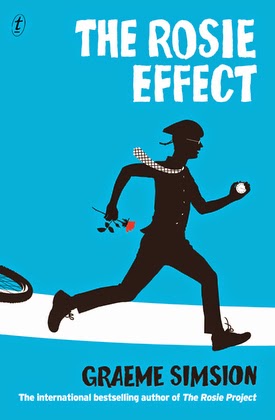
Review: The Rosie Effect, by Graeme Simsion

Before I get stuck into my review of The Rosie Effect, I very quickly want to comment on its predecessor, The Rosie Project. Because if I'm going to be honest, I have to admit that I didn't totally love it. While I thought Don was an excellent narrator and loved the perspective he provided to me as a reader, I did think the story itself was too predictable. And overly predictable stories are a pet-hate of mine. But perhaps that's what was needed in order to make Don's story more accessible to people reading it? Who knows?

Despite these minor grumbles I did like The Rosie Project enough to read it's sequel, The Rosie Effect. And this was anything but predictable. At a whopping 411 pages long, The Rosie Effect takes you on a whirlwind adventure as Don and Rosie are unexpectedly expecting their first baby in their first year of marriage. 

Most of the craziness that results is ironically due to Don trying to be more empathetic and considerate of others, which we as readers can certainly empathise with. After all, how many times have you done something because you think it's for the right reason, when really it has the opposite effect? Well, this is a phenomenon that Don becomes increasingly familiar with and fortunately as the reader you get to laugh and cringe at Don as he fumbles along trying to do the right thing by those he cares for
.

It's this growth in Don - where he is more considerate and caring of how his actions effect those closest to him - that I really enjoyed in The Rosie Effect. After all, Don is the most unlikely person to start a men's support group, learn the ins and outs of fatherhood and bring together broken families. And yet he gets himself into all of these scenarios without realising the (unintentionally) positive effects he is having on others. As the fortunate reader you get to go on this journey with Don, who despite helping others, still finds much human behaviour utterly confusing and unpredictable. And thus Don reminds us that this is a wonderfully fundamental part of being human, making it easier for us as readers to connect with him and see the world from his perspective.


But it's not all happy-go-lucky for Don and Rosie, who face their own relationship challenges as they both adjust to the realisation of becoming parents. Simsion's portrayal of the daunting prospect of becoming parents is both touching and unnerving, particularly due to Don and Rosie's different approaches to coping with the upcoming changes. 

Overall The Rosie Effect is a great read and a great sequel to what was such a hit of a first book. It's very funny and very entertaining and has a lot of heart.


Tuesday, 10 February 2015

Reviews: What I read this summer

I love summer. I love the (mostly) warm weather with blue-sky days. I love that I get to go on holidays. I love that the days are longer. And I love that I get to wear summer dresses. But mostly I love the fact that I get more time to do one of my favourite things in the whole entire world. Which, you probably won't be surprised to know, is reading lots.

This summer I read everything from confirmed and unconfirmed autobiographies, to books about relationships, education and Australian politics. So here are my thoughts on the books I read over summer. What did you read?


Yes Please, by Amy Poehler

There's no other way for me to start this other than to say that Amy Poehler is a complete babe. She's just so sassy and so self-assured, yet she also gives you the impression that she wears her heart on her sleeve. Who wouldn't warm to that sort of person?

In Yes Please, Poehler discusses how she got to where she is in her career today (she worked really hard); talks about being a single mother (it can be really hard); and comments lots on the process of writing a memoir (it's really hard). Yet even though she has worked very hard, what becomes evident is that she does not shy away from challenges - in fact, she embraces them.

Unlike with other memoirs, it's sometimes hard to tell whether Poehler is being truthful or tongue-in-cheek. Which I kind of like, because it keeps you guessing about who the 'real' Amy Poehler is. However the flipside of this is that you end up feeling like you might not actually know Poehler any better after reading her memoir; as if everything in the book is calculated to present a certain image of herself. Which no doubt all memoirs are in some way - it's just that it was a bit more obvious for me in this one than others have been. 

Nevertheless Poehler's can-do, let's-say-yes-and-get-down-and-dirty approach to everything is so inspiring that it makes you want to fist-pump the air and say, 'Yeah, I can do whatever I set my mind to too!' after reading it.

My favourite quotes? 
'Nobody looks stupid when they are having fun.'
'Change is inevitable, get used to it, so just ride the wave.'  
'It takes years as a woman to unlearn what you have been taught to be sorry for. It takes years to find your voice and seize your real estate.'
Poehler has certainly seized her real estate and her memoir is clear evidence of this, despite me being hungry for more.


Class Act, by Maxine McKew

Class Act is an insightful look at how some of Australia's leading schools have achieved being the best schools our country can offer our students. It's a celebration of their achievements, focusing on a handful of schools from all over the country and their leaders who have taken a stand to create positive change.

As someone who is studying teaching it was a really engaging read, exploring many key ideas discussed in my course, such as: how well are we preparing students to cope in a world that increasingly requires them to adapt and use their initiative; the importance of lifting the bar of what's expected and accepted of students at school; and the importance of giving all students access to a rich variety of subjects and resources - not just those who can afford it.

It's always refreshing to see how some of these concepts, which are usually discussed in theory, have been successfully implemented by key change-makers at the schools included in Class Act. What's even more refreshing to read is how many of these schools have beaten the odds in some way to achieve more than what the community thought they and their students were capable of.

My favourite quote?
'If we don't do everything we can to develop the full potential of these children, then the loss to our society it criminal' - interview with John Farrell, Principal of Our Lady of Mount Carmel Primary School, Sydney, who has embraced high expectations for all of his students, many of who are Indigenous.


Us, by David Nicholls

This is the story of Douglas and Connie, a couple who have been married for twenty-odd years. Their only son, Albie, is about to go to college, and Connie has come to the realisation that she no longer wants to be married to Douglas. This comes as a shock to Douglas, though as the narrative unfolds it becomes more and more evident that there were signs of cracks in their relationship for some time.

Nevertheless Douglas and Connie decide to go on one last trip to Europe together with Albie, who is unsurprisingly reluctant to be dragged along with his clearly unhappy parents. And so the narrative largely focuses on this family's trip in Europe and David's misguided attempts to keep his family together. It also flashes back to when Douglas and Connie first met and what initially drew them together, which I particularly enjoyed reading (I'm a big fan of flashbacks!).

Though all of this might sound cliched and dull (which is what I would have thought had I not seen Nicholls authored it), it's a touching account of a marriage on the decline and what happens when you grow apart from the person you fell in love with and married. So often relationship stories end with the protagonist securing his/her true love, where you're simply left to assume that they'll live happily ever after. Us offers a different narrative.

At times wickedly funny, at others dispiritingly unsettling, Nicholls has created a memorable story with vivid characters that you'll both love and want to strangle.


My Story, by Julia Gillard 

I was really looking forward to this one. Ever since Gillard was horribly mistreated as Prime Minister, I've wanted to know more about this woman who put up with so much disrespect yet didn't let it stop her from achieving so much in her short term as PM. My Story is a thorough account of these achievements, detailing the reasons for many of the policies Gillard's government introduced. It's unfortunate that politicians don't get more of an opportunity to explain their positions while in office, and Gillard's book certainly highlights how petty and embarrassing the reporting of politics is in Australia given how many important changes were actually happening throughout her leadership.

It's unsurprising that Gillard's book also touches on her professional relationship with Kevin Rudd and it's eventual demise, though she does so tactfully and respectfully. She's also happy to admit her flaws, particularly the lack of effectively communicating the Labor leadership change and carbon price to the Australian people. 

Gillard also delves into her mistreatment as Australia's first female Prime Minister. This was the part of the book I was most interested in, as it was Gillard's mistreatment as Prime Minister which initially re-ignited my interest in feminism. While Gillard doesn't convey that she is bitter about what happened, she rightly still questions why more people, particularly men of influence outside of politics, didn't stand up for her and call out more people on their sexism to send the public a message that such disgusting behaviours would not be tolerated. And when she documents just how highly she was scrutinised as a woman Prime Minister - everything from what she wore to her relationship with her partner (subjects that are irrelevant for male politicians) - it's truly alarming that this was happening only a year and a bit ago.

While at times Gillard does let her guard down (for example providing humorous anecdotes about her partner Tim), for the most part her book felt quite reserved and lacked a sense of getting to know Gillard better personally, which is what I was (perhaps erroneously) expecting. But I've not read another politician's biography before so perhaps this is the norm? Or perhaps that was the intention? 

The following line, which is the last one from Gillard's memoir, sums up the book perfectly:
'I hope [this book has]...helped you see not only the world I lived in as prime minster but the vision of our nation I was working towards. Stronger and fairer.' 
My Story certainly had this outcome for me, despite my disappointments with the book. But it is Gillard's story after all, a woman who has had her fair share of being told how she should behave and communicate.


Go Ask Alice, Anonymous

This was a book a friend recommended I read. In fact, she leant me her copy, which had previously been her mother's, which made it an extra special reading experience. It's so fun reading books that are owned by others and thinking about what other adventures and walks of life they've been on, especially when the books themselves are as influential as Go Ask Alice is.

Published in 1971, Go Ask Alice is the story of an anonymous protagonist who inadvertently becomes involved with and subsequently addicted to drugs. The origins and authenticity of this book are still unclear, which adds to its mystery and allure.

It's a story about teenage angst, about the hopelessness of feeling like you don't quite belong anywhere, and about the need to properly talk about and support those who are showing signs that they are slipping away from us. It's a book that will tug at your heartstrings and make you question just how far we as a society have really come in supporting those who need our help the most. All of these themes make Go Ask Alice such a timeless and powerful read.


Tuesday, 18 November 2014

Very funny memoirs that I recommend you read right now

Recently there's been an upsurge in memoir writing. Everyone seems to be writing them these days. And as with any upsurge in trends, there're those who criticise them. In the case of memoirs, there's those who think they're pointless, self-indulgent tales of b-grade people adding little value to the lives of those reading them. Subsequently this lessens the quality and legitimacy of the memoir as a literary genre, which tends to irritate book snobs.

My main response to those views are that if you get irritated by the person whose memoir you've just picked up, then don't read it. It's really that simple. I'm aware that this goes against the title of this post, but I would seriously consider this option at risk of you spending a very angry few days fuming that you're reading a book about a person who gets up your nose. While this option does not guarantee the quality of the memoir you're going to read, it's a step in the right direction.

This is where I fortunately come in. Because I can almost guarantee that you'll be highly entertained by the below reads, particularly if you enjoy female comedy memoirs. Even if you're not entirely familiar with Kaling, Fey or Lawson's work, that doesn't really matter because all three memoirs are highly entertaining in their own right. But maybe not if any of these people make you want to rip your eyeballs out (refer to paragraph 2). In that case move on to a different post.


Is Everyone Hanging Out Without Me? (and other concerns), by Mindy Kaling

This was the first book I completely read on my phone as an e-book. I have a feeling Mindy would admire that, which is why I've included this information. But she would also hate that I'm drawing attention away from her memoir, so I'll respectfully stop talking about the fact that I read 487 pages on a 5cm x 10cm screen and continue with my thoughts on the book.

This memoir was laugh out loud funny on so many occasions, particularly because of Kaling's ability to squeeze in hilarious comments in the middle of her anecdotes, catching me pleasantly off-guard each and every time. And yes I realise Kaling is a comedian, and therefore you would probably expect this in a memoir that is written by her. But she does it so effortlessly and amusingly that it never got old and made me chuckle almost every time.

In amongst Kaling's hilarious quips and self-deprecating anecdotes, there's also a clear message that it's OK to be nerdy/quiet/ambitious/awkward. This may sound like a cliche message, but it's one that is so important in the ever-increasing perfection-seeking world we are living in. So kudos to you Kaling.

I promise Mindy hasn't paid me to write this review.


Bossypants, by Tina Fey 

I have one confession I must get out of the way before going on to discuss this book. And that is that I put off reading it for quite a while because the cover of it scared me. Those arms are just way too big for Tina Fey's face, and I'm still struggling to deal with that. I hate the fact that I feel this way, but I do. I hope I haven't offended anyone with big arms.

Fortunately when you read a book, you don't need to look at the cover of it all too often. Especially if it's a soft back, like this one was. Therefore I was able to conveniently fold the whole cover over itself so that I didn't have to look at it at all while reading the book. Which made for a much more pleasant reading experience.

Now that I've got that off my chest, I can continue talking about Bossypants, which was thoroughly entertaining and made me respect Tina Fey so much more than I did before reading it. Fey's memoir captures how all-encompassing working in the television industry is; how much one has to sacrifice if you're going to succeed in that industry; and how resilient you need to be to get through the crap times. But Fey shows us that it is all possible and has been worth it for her.

The book itself reads as if it's a conversation between Tina and you, except that you don't really get to talk. But if you're like me and you don't enjoy talking to people you don't know, then that suits just fine. My only qualm with Bossypants was that sometimes the passages read a bit awkwardly, but I can forgive Tina for that due to her witty funniness.


Let's Pretend This Never Happened, by Jenny Lawson

Welcome to the crazy-whacky-bonkers world of Jenny Lawson, best known for her award winning and very successful blog The Bloggess.

This was such a bizarre yet hilarious read, causing me to laugh out loud on many occasions next to strangers on trams who would shuffle uncomfortably when this happened. In fact, I don't think I've ever read a book that was so consistently funny. And what's even better is that most of the anecdotes in it are based on true stories. So the crazy/whacky/bonkers stuff written in it actually happened in real life.

Sometimes this meant that I had to take a break from the book just to give my brain some time to comprehend (and recover) from everything that it had just read. So reading the book was exhausting at times, but in a good way (kind of like exercise. And yes, if you're wondering whether I'm likening reading this book to doing an exertive workout, the answer is I sure am and you're welcome for this handy tip that is bound to keep you a lot less sweaty than what doing exercise would).

The best analogy I can come up with for reading this book is that it's like shrinking into a miniature person, crawling inside of Lawson's head, and having a crazy-ass kaleidoscopic party together with all of her fantastically erratic thoughts. Especially because Lawson's writing is so vivid and ebullient (thanks Lena Dunham); taking you on many unexpected and ludicrous tangents along the way. For example, it led me to: Googling whether raccoons wash lots (they do if they think it's food); learning about artificial cow insemination; Googling what bobcats look like; considering whether I should get a taxidermied animal as a household decoration; and being almost convinced that a zombie apocalypse could happen.

Yet subtly woven through Lawson's outrageous story is also the message that no matter how different you or your family are, that's ok, because you don't have to fit in. In fact, being different is fabulously glorified in this book. This, along with everything else I've just mentioned, makes it a bloody good book.


Tuesday, 28 October 2014

Review: Rudd, Gillard and Beyond, by Troy Bramston

I'll be the first to admit that this was a strange choice of book for me. But recently I've become quite interested in the Labor Party; a sentence I never thought I would utter due to my previous lack of interest in politics. In recent years that interest has been sparked, so here I am now writing this review.

Bramston's book is a short novella focusing on the last few months of the Labor Party prior to its 2013 election loss. As well as analysing the reasons for the ALPs demise, it posits some bigger-picture issues, such as the fact that the Labor Party was once 'the engine room of national renewal, the generators of change, the pioneers of reform.' Thus Bramston asks, what happened to stifle this?

Bramston outlines some key reasons for Labor's fall from grace, with Rudd and Gillard being the main focus. Bramston's view is that the Rudd-Gillard government was weakened by internal squabbling, little collective approach to decision-making and a failure to communicate a compelling story. Therefore Bramston's view is that the ALP is faced with the current challenges: it is beset with leadership anxiety, an identity crisis, and is no longer representative of the community. These are key points that the current Labor party must focus and improve on if it's to win the trust of voters again.

Bramston's book also paints Rudd as an uncontrollable egotistic leader. While these qualities of Rudd's have become more widely known since the ALPs 2013 election loss, I was still baffled by how out-of-control his behaviours were. One example Bramston gives is of Rudd changing his mind on policies in the minutes before announcing them to press without any prior consultation from anyone. Bramston includes the account of one campaigner from this time who states that 'people literally looked at each other and said, "What the fuck...?"' in response to Rudd's actions. It's outrageous to think that such erratic behaviour was evident in a political campaign from our prime minister.

What I disliked about this book is how unfairly scathing Bramston is towards Gillard, particularly on the back of discussing Rudd's aforementioned farcical behaviour. Yes, Gillard wasn't perfect. But Bramston goes so far as to say that Gillard had little to do with the policies Labor implemented during her prime-ministership, which is quite ludicrous when one of her biggest talents was her ability to negotiate deals with other MPs to get 561 bills passed through the parliament - an impressive feat for a minority government.

Despite this weakness, a strength of the book is the inclusion of interviews with the late Gough Whitlam, Bob Hawke and Paul Keating. Their comments on the Labor Party both past and present provide engaging retrospective insights which for the most part compliment the arguments Bramston posits in his book. Keating summarises the recent troubles Labor has found itself in well when he states, 'Good intentions are simply never enough. Governments must have good intention with the facilitation.' It's the latter that the ALP has been lacking in recent times.

This book didn't convince me to run out and become a member of the ALP, and I'm fairly confident this was not Bramston's intention. Instead it is a blunt, unapologetic critique of the bizarre events that led up to and shaped the fate of the Labor Party in the 2013 election. While there's a lot of work for the ALP to reinstate itself as the progressive party it once was, Bramston outlines a number of suggestions to combat this, making it a great pocket-sized chronicle for anyone wanting to know more about the current ALP.


Tuesday, 29 July 2014

Review: Destroying the Joint, edited by Jane Caro

The catalyst for the collection of essays that is Destroying the Joint: Why Women Have to Change the World was a comment made in 2012 by a male radio shock jock. I'm not going to mention his name - even though some of you may already know it - but I will tell you about the comment since it did set the context for this book. 

The comment was made in relation to the then Prime Minister Julia Gillard's intentions to donate money to women in the Pacific for the development of their leadership skills. This shock jock claimed that women were doing enough damage in the world already - specifically naming ex-Victorian Police Commissioner Christine Nixon and lord mayor of Sydney Clover Moore as examples - so surely we needn't be giving more leadership opportunities to women. In fact, women were doing so much damage in the world that they were 'destroying the joint', thus laying fame to this phrase. 

A cheeky tweet by Jane Caro in response to this shock jock's comment - 'Got time on my hands tonight so thought I'd come up with new ways to destroy the joint, being a woman and all. Ideas welcome.' - led to an unprecedented national response from women who were very much angry/disgusted/exasperated that such comments were (and still are) being made about them publicly in 2012. The women involved decided to unite, and so the Destroy the Joint campaign was born.

Thus the essays in Destroying the Joint are in response to this very notion of women 'destroying the joint'. They provide a variety of angles on this idea, such as whether or not women are actually in 'the joint'; whose joint it is that we are/are not destroying; who has a right to say whether or not we are destroying the joint; and, if we accept that we are destroying the joint - as this doesn't have to be a negative thing - whether or not we should take more pride of destroying it.

Written from political, social, environmental, creative, educational and disability perspectives, Destroying the Joint provides a variety of lenses through which this issue can be viewed through, as well as how it relates to wider feminist issues. The way the essays are written make it very accessible for those curious to learn more about feminism and it's vast scope. For me, they provided a solid introduction into avenues of feminism I'd like to pursue further.

I guess my next question with a book like this is how to keep the conversation going? And how do we start including people that might not normally pick up a book like this so that they can enter and be part of this conversation? Because I believe that's so important if we do want more action to take place to help feminist messages spread and start having more of an impact on everyday life for women and men. Now, I don't quite know the answer to this question I have posed, but I do know that I want to keep engaging in these issues and conversations so that change can become more of a reality.

I'll finish off by including some cracking quotes from the contributors to Destroying the Joint so that you can get a taste of this fantastic collection of essays. 

Michelle Law:
'Being a feminist is not about despising men, or overtaking them...Feminism is about despising an idea. And the idea is that women are unequal to men. It is that they deserve or should expect the kind of sexism, misogyny and mistreatment that they receive. It is that any women who rejects this treatment will be met with aggressive, irrational and sometimes unintelligible scorn. When we are destroying the joint, we are calling out sexism and misogyny.'

Catherine Deveney:
'The truth is, there is not one feminism, but many feminisms. And just because you are pro woman does not mean you are anti men. I think one of the main reasons I am a feminist is because I love boys and men so much and I have hated the way society has expected them to live, love and be. Feminism is not anti men. It's anti arseholes, misogynists, pricks, creeps, thugs and bigots.'

Senator Penny Wong
'We live in the same Australia, we share many values, but our experiences and therefore our perceptions of reality can be so different. If we are to understand across these differences, we have to be capable of more than tolerance. We have to try to imagine another's experience and to do so with imagination, compassion and respect.'

Overall, Destroying the Joint is very much an informative, refreshing and entertaining insight into current Australian feminism and one which I very much recommend.

Want more?

Keep engaged in the conversation by following the Destroy the Joint community on Facebook or Twitter.

I've also recently discovered Cherchez la Femme, a fantastically entertaining and engaging feminist podcast that I also highly recommend you check out.


Monday, 14 July 2014

Review: A Girl is a Half-Formed Thing, by Eimear McBride

Wow. I'm stumped. Speechless. Lost for words. Except I want to, need to, write some in this space. So that I can share this unique book with you.

Adjectives that come to mind are: startling; intense; jagged; brutal; unapologetic; transfixing; haunting; poetic; beautiful; brilliant. I've not read a book that has made me feel so dazed yet so powerfully moved after reading it as A Girl is a Half-Formed Thing has.

It's the story of a girl, her brother, love, abuse, and everything else that happens along the way. The way that Eimear McBride tells this story is astounding, as she goes beyond conventional language structures to do so. And McBride does so so exquisitely, taking the reader on one hell of a ride.

That's all I'm going to say. Because that's all that needs to be said.

Tuesday, 8 July 2014

Review: Night Games, by Anna Krien

I have to admit, football is not my favourite topic to talk about, let alone read about. But in saying that, the particular culture it tends to promote - that being a highly masculine world where players are given an almost god-like status - is still one that I find somewhat fascinating, perplexing and at times disturbing. So when I discovered Anna Krien's Night Games, I was hoping to get an insight into these issues of sex, power and sport that have intrigued me.

Night Games follows a rape trial involving the Collingwood Football Club in the aftermath of the 2010 Grand Final against St. Kilda. Krien uses this trial as a lens to explore society's attitudes towards rape; gender and power imbalances in male-dominated sports; and how problematic it is that these attitudes remain accepted in everyday culture. It's like Krien has held up a giant mirror panel through which the trial is originally refelcted in, dropped it so it shatters, and then we the readers are left to pick up the pieces and put it back together again. Though each time we pick up a piece, our own images are reflected in the pieces themselves, reminding us that our own ideas and experiences will always influence how we view particular scenarios. The glass piece itself is never perfectly whole again either - lines from where the pieces join up are still evident so that the original scenario can never be viewed in the same way again; and some of the pieces have gone missing so that we can never truly know the full story. 


That's what reading Night Games is like, with Krien highlighting how fragmentary trials, particularly rape ones, can be, and how many shades of grey are involved with trying to understand the act of rape itself and the actions of the people directly involved. It's what I most enjoyed about reading Night Games, with the shades of grey Krien gutsily explores extending to attitudes towards sex and power in sport. It's very risky territory and Krien is very aware of this herself, stating, 'You've got the rapist or the liar...and by trying to seek out a shade of grey I'm protecting one of them' (p.258). She goes on to state:
'It is as if there's a fear that venturing into a grey area to discuss the complexities of consent and rape will unravel some forty years of feminist spadework, that people will be unnecessarily confused by any such discussion. But surely feminism isn't that fragile. And isn't it obvious that people are already confused? For despite the law being clear on the definition of consent, neither the police nor the public prosecutors seem to have much faith in a jury's ability to convict in certain cases, even if they do satisfy the legal criteria.' (p.259)

Thus, this very issue of how to delve into these shades of grey is a central theme of Night Games. The issues that unravel are many, including, but not limited to ideas that:

  • Thinking a women is asking for it when drunk can be just as bad as thinking all footballers are badly behaved jocks and potential rapists. 
  • AFL is one of the few male-only sports codes in the world that boast a large proportion of female supporters. Yet the gender and power imbalances are still so vast. Why? 
  • Are football 'groupies' complicit in promoting rape culture? Or are they examples of sexually empowered women?
  • Boys, as well as women, are used, abused and discarded in football, though obviously in very different ways.

Krien is so well read and justifies the positions she offers with such clarity and conviction that as a reader you feel that she is representing the issues in a very fair and honest manner.

Night Games, as Krien states towards the end of the book, is not anti-sport. After all, not all footballers, let alone sportsmen, treat the people they interact with poorly. But what needs to change is the 'men who use sport as power and the people - teammates, fans, coaches clubs, doctors, police, journalists, groupies - who let them do whatever they want.' Night Games is one gripping insight into this complex, multifaceted world, and has allowed me to begin seeing the shades of grey where I once didn't. 


Wednesday, 25 June 2014

Review: The Stupid Country: How Australia is Dismantling Public Education, by Chris Bonnor and Jane Caro

Why are private schools called 'private' when they receive substantial government funding? Why are public schools considered the lesser option out of private and faith-based schools? Which types of schools deserve government funding the most? What are the consequences if some sectors receive more government funding than others? These are the sorts of questions raised in Chris Bonnor and Jano Caro's provocatively titled, The Stupid Country: How Australia is Dismantling Public Education.

Bonnor and Caro's main concern with Australia's current education system is that we are perpetuating social and class divisions through our current arrangement of schools. For, Australia has the highest funded, but least regulated private school systems in the world. This is placing increased pressures on the public school sector, which is highly regulated yet is struggling to keep up with policy demands and the ability to cater to the diverse needs of students enrolled in them. Bonnor and Caro propose that our system is so unsustainable that more and more public schools will be forced to close down in the coming years, meaning that free access to education will become less and less available. Is this the sort of future we want for our country?

Before unpacking this idea further, Bonnor and Caro explore how Australia has come to this predicament. They suggest that an unwarranted hysteria has been created about the quality of Australia's education system, which actually isn't as bad as it's been made out to be. However, politicians and the media have incessantly played on the fears and anxieties of parents, who are made to feel increasingly uneasy about their role as caregivers and the security of their children's futures. These fears are so influential that just as 'you can't hear terrorism without thinking war, you can't hear public schools without thinking they need to be fixed' (p.44). All the while, the private school and faith-based sectors continue to flourish. 

Federal politicians in particular have been adding fuel to the fire of debates regarding who most deserves federal school funding, often defending their financial support of private schools (public schools are state funded). John Howard's encouragement for schools to be free markets - where parents are entitled to choose where to send their children based on whether they're willing or able to pay school fees - and the supposed lack of values prevalent in public schools sewed the seeds for the current generation of parents concerned about how to ensure the best futures for their children.

But is it really that bad if parents who can afford to send their children to private schools do? Absolutely, Bonnor and Caro argue. After all, a successful and prosperous society relies on all citizens having access to quality learning, as well as learning how to live and work alongside a diverse range of people. Public schools help this cause as they 'build the social capital and the social bridging that keeps our society and communities together, and create a stable and prosperous society' (p.224). As Bonnor and Caro point out, this is why the public education system was created in the first place - to ensure that everyone had equal access to quality education, no matter what their personal circumstances were. '[T]hey are the best way we have found to help overcome the inevitable inequalities that are visited upon all of us at birth' (p.168). Unfortunately our governments don't seem to support these same values.

Not only is the deterioration of our public education system bad for the fair and cohesive development of a nation, but Bonnor and Caro also suggest that it is a poor economic choice for parents to send their children to private schools. Interestingly, they claim that private schools don't actually offer students any advantages in terms of achieving high results compared to if the same student attended a less prestigious school. While comparisons of end-of-school results may cause people to argue otherwise, the fact of the matter is that there will always be different trends in results of private vs. public schools when the former hand-picks students and/or has students attending the school from (generally) more privileged backgrounds. They also site research which claims that high-achieving students aren't actually that disadvantaged from being in classes with lower-achieving students, whereas there are many benefits of the latter being in environments with the former. The perks of private schools simply tend to appease the anxieties of parents wanting to send their students to a school with a particular reputation and a particular demographic of students, rather than having any definitive benefits for student outcomes.

The issue with all of this isn't that private and faith-based schools exist in the first place, because they do and they are here to stay. The issue is the social divisions they are creating, which is all funded by the public purse. Neither private schools, the people that work there, nor the parents who send their children there are necessarily to blame for our unravelling education system. Rather, it's our governments and politicians who have a lot to answer for, as they have continued with this unsustainable model. For, as Bonnor and Caro point out, 'Governments should be making sure that public schools are so well resourced that there is no need for parents to feel they must sacrifice their time, energy or standard of living to access decent education' (pp.116-117). Unfortunately this hasn't been the case.

Therefore the purpose of this book is not to pit each system of schooling against each other. Instead it unpacks the myths and sheds light on the issues which have become highly politicised by the media, so that Australians can start an informed dialogue regarding how we can improve our education system. Given that the most successful education systems in the world are cooperative, rather than competitive in nature, these are the models we should look for inspiration. For, the latter is proving to be detrimental for the success of our students and nation as a whole.

Overall, The Stupid Country is a highly insightful exploration of how Australia's education system has become what it is today and the consequences of these decisions. I've only just scratched the surface of the many compelling issues raised in the book, which itself is only an introduction to them. Thus The Stupid Country is a very important read if we are to understand what changes should be made to better our education system, so that Australia does not become the stupid country.


Wednesday, 4 June 2014

Review: The Misogyny Factor, by Anne Summers

The 1970s were an extraordinary time for women. Finally, they were speaking out and taking action for matters that were specific and important to women; letting society know that how they were being treated was not ok. 

Fast-forward forty years later to 2012. Australia has its first female Prime Minister, a female Governor General, as well as a number of female MPs. While this progress is something to be proud of to some extent, how far has Australia really succeeded in terms of women's issues since the 1970s? That's the question Summers explores in The Misogyny Factor.


Summers begins with the matter-of-fact statement that despite the aforementioned 'achievements' of women, the state of women's affairs in Australia is little to gloat about. Sure, more women are in positions of leadership than ever before, but to what extent does that reflect society's acceptance and support of women in these positions? Just how inclusive is Australian society of women, particularly in terms of workplace involvement?

Not very, argues Summers. After all women's workforce participation, disparities in pay, the little number of women in senior company positions (which in Australia happen to be some of the lowest in the developed world for ASX listed companies), and domestic violence are all still issues affecting women despite four decades of attempts for change. In other words, the misogyny factor, which is the 'set of attitudes and entrenched practices that are embedded in most of our major institutions...that stand in the way of women being included, treated equally and accorded equally,' needs to be overcome. Importantly Summers notes that the misogyny factor is not only perpetuated by men, but by women as well. 

For example, Australia's childcare system isn't particularly accommodating to women, who tend to be the main carers for their children. In fact, it's as good as disapproving of working mothers. Why else is there no alignment between work, family and schools, not to mention a lack of affordability and accessibility, for families needing to send their children to child care? Unlike in countries like France, whose child care services are state regulated and tend to be close to schools where siblings might attend so that mothers don't have to drive across suburbs to pick up their children from various locations.


In terms of equal pay, the lifetime earning prospects of women who have spent years at university is still significantly less than men who have spent the same amount of years at university. This was one of the most shockingly pertinent points for me as a young woman, particularly when Summers states that, 'simply being a women is the major contributing factor to the [pay] gap in Australia, accounting for 60 per cent of the difference between women's and men's earnings.' To put those percentages into direct monetary figures, NSW male law graduates earned $70,300 in 2009, as opposed to the significantly lower figure of $63,500 that female law graduates earned with the same qualifications. How is this still happening in 21st-century Australia?


Summers discusses a myriad of other ways that women are excluded from full and equal participation in Australian economic and public life: if women do poorly in their job, the whole sex shares the blame; if women on Boards decide to make changes they are disliked; and if women are in positions of leadership, they are likely to have gotten there by behaving like men (which is hardly the point). Summers asks why can't the army - an organisation that orders to kill - order to not sexually attack its female members? And then there's Summers' discussion of Julia Gillard's prime ministership, and the many ways she was subject to sexual discrimination, sexual harassment and bullying. All of these points, and many more, make for an incredibly engaging read. 


If the economic potential of women was properly unlocked by appropriate support from local, state and national levels, it would have substantially positive effects on Australia's economy. If this also happened globally, then the effects on the global economy would be astronomical. In fact, 'the Economist points out that the increase in the employment of women in developed countries during the past decade has added more to global growth than China has, and that's a lot.' Hillary Clinton mentioned this at the 2011 APEC Women and the Economy Summit - facts that you can't feel anything but baffled by. And yet, for some reason, little is being done to continue unlocking the economic potential of women. Why on earth is this the case?


Summers doesn't necessarily offer any clear-cut solutions to these issues, for they are understandably too complex to be discussed within the 160-odd pages of this book. What Summers does do is offer a rational, intellectual discussion of where things have gone wrong, where proposed changes should start, and why it is so important for these changes to happen. This frank, unapologetic book is a must read for anybody curious about the issues facing women in contemporary Australian society, and it'll surely leave you wanting to know more, as it has for me.

Want More?

The Wheeler Centre recently held a session called 'Women at Work' - another insightful discussion about women's opportunities in the workforce. Listen to it here.


Wednesday, 26 March 2014

Review: The Smartest Kids in the World, by Amanda Ripley

I was very much looking forward to reading Amanda Ripley's The Smartest Kids in the World: And How They Got That Way. My eagerness stemmed from the fact that I'm currently studying my Masters of Teaching. One of my main areas of interest has been the comparison of different education systems from around the world in order to understand how the Australian education system can be adjusted for the better. The Smartest Kids in the World concerns itself with just this issue, though given that Ripley is an American investigative journalist, her main focus is on how the education system in the United States compares to other international education systems.

Ripley selected Finland, South Korea and Poland as her main case studies in the book. Finland and South Korea were chosen as students in both countries are some of the best performing ones in the world, based on the international PISA tests which examine the skills and knowledge of 15 year olds from around the world. Yet, both countries have diametrically opposing approaches to education. Finland is renowned for its prestigious, select-entry teacher training colleges, and students are generally not expected to complete homework. Conversely, South Korean students are renowned for spending the majority of their school life cramming in study, spending up to 16 hours a day doing so. Interestingly, the students in both of these countries were not in such a privileged position twenty-odd years ago. How have they come so far? This is the question at the heart of Ripley's book. Hence, Poland makes for an interesting inclusion as it mirrors the positions that Finland and South Korea were in prior to their educational dominance, showing the potential to reach similar positions.


A graph representing how various countries have fared internationally in education. Similarly to the US, Australia has improved relatively little in the past 50 years.


In order to contextualise her research, Ripely follows the stories of three United States exchange students to these respective countries. Such an approach provides an intimate and honest insight into what it's like to learn in these countries firsthand. While for the most part this was effective, at times I did feel that Ripley's own voice took over from the students' ones, causing me to question the genuineness of the position she was attempting to portray as theirs.

Regardless of this, Ripley's findings are quite surprising and incredibly fascinating. So much so that my own copy of the book is riddled with post-it notes from all of the points I wanted to return to at a later stage. Now do not fear, because I won't pummel you with all of the points of interest I came across right now. Instead, I've decided to focus on a select few to capture how expansive this topic is:

'The quality of an education system cannot exceed the quality of its teachers' (p.63).   The success of the Finland's education system in particular can be attributed to the extensive teacher training that occurs prior to becoming a qualified teacher. Entry to teacher training colleges in Finland is so highly selective that it is akin to how difficult Medicine or Law school courses are in Australia. Such an approach reflects how seriously Finnish society considers education, by ensuring that the teachers who will influence future generations of students are only the best of the best. This reality provides students, parents and even policy makers with the confidence that these teachers have been thoroughly trained and deserve the utmost respect for this. Again, think of how revered Doctors and Lawyers are in Australian. In turn, thorough professional training (which continues throughout their career) equips teachers with the skills to cope with adversity in the classroom. It's really a win win situation.
Educational success requires rigour.                                                                       Achieving good results is hard. It requires a lot of effort. But students who do well are rigorous with their studies. Rigour is not only an important element of education, but of life itself. It teaches perseverance, particularly in times of failure. Yet in the current educational climates of Australia and the United States, it's almost impossible for students to fail. Instead, we cotton-ball them and teach them that there aren't really any consequences if they chose not to put the required effort into things. Such an approach is not benefiting anybody.  
When the going gets tough, it's only education that matters.                                              Ripley attributes the severe economic crises that Finland, South Korea and Poland have all faced for their educational successes. For, these countries appreciate how important education is in empowering nations, and how this can positively impact on a nation's economy. Unfortunately this realisation hasn't occurred in countries like the United States (or arguably Australia), who haven't experienced economic crises and/or high levels of illiteracy to the extent that the aforementioned countries have. Hence, there's been no real reason for education to be overhauled and reformed in countries like Australia and the United States. The consequence of this is that students have become used to getting away with not doing what's expected of them, because there'll often be ways out for those not willing to put in the effort (such as going on the dole). This links in with my previous point regarding rigour, and Ripley puts it well when she states, 'Wealth has made rigour optional in America' (p.192).  
Students need to be set high expectations.                                                                           If students are set these, then they are more likely to aspire to them and achieve high results. Unfortunately the opposite is true if teachers set unchallenging tasks, as this suggests they have low expectations of students, and thus students will not strive for high results. There is an abundance of research that affirms this. Part of the challenge that Ripley attributes to this is the lack of trust adults seem to have for students in countries like the United States, which effects the mutual levels of respect each party has for the other. But if we can learn to trust our younger generations, such as the Fins do, and firmly believe they are capable of achieving high results, as the South Koreans do, then positive outcomes will develop. 
'When looking for a world-class education, remember that people always matter more than props' (p.215). Of the four focus countries in this book, the United States spends the most amount of money per student. Yet, as Ripley discovers, this expenditure is having little effects on how well students are performing in schools. If anything, it is unnecessarily distracting all those involved in the education system. For, Finland, South Korea and Poland have all managed to become successful while also maintaining relatively traditional, no-frills approaches to schooling. This was probably one of the points that challenged me the most out of the book, particularly as much of the emphasis in my Masters of Teaching has been on steering away from such formal approaches to teaching. But it's also reassuring in that it suggests schools don't need fancy gadgets or state-of-the-art resources for students to do well. 

Overall The Smartest Kids in the World was a fantastically informative and enlightening introduction into various education systems from around the world. There is a clear message that if nations want their education systems to improve, a dramatic shift in how education is understood and valued by society as a whole is required. At the same time I didn't agree with everything Ripley proposed. My main gripe was that the book focused too heavily on the idea that educational success is based on how well students fair in traditional, old-fashioned tests, where in fact this is only one of many ways to measure student learning and potential. While tests like PISA are incredibly comprehensive, they can only measure so much, and its limits do need to be considered when praising the successes of particular nations.

Nevertheless, 
The Smartest Kids in the World provided some incredibly powerful and significance points to reflect on in terms of the Australian education system, and how we can think differently about the ways we can achieve educational success. Reading it has been particularly poignant given that I'm currently undertaking my Masters of Teaching, and has left me hungry to learn more about this area. I highly recommend it to anyone who has works within, or has an interest in, the education system.


Read more: http://bloggerknown.blogspot.com/2013/02/changing-blog-page-by-page-number.html#ixzz2mUXnF3wj